



Brain Tumors
Radiation Therapy for Brain Tumors
The brain is the center of thought, memory, emotion, speech, sensation and motor function. The spinal cord and special nerves in the head called cranial nerves carry and receive messages between the brain and the rest of the body.
There are two main types of brain tumors. Primary brain tumors begin in the brain itself and can be either benign (not cancerous) or malignant (cancerous). Tumors that originate in the brain or spinal cord rarely spread to other parts of the body. In contrast, metastatic brain tumors are the result of cancer that starts elsewhere in the body and then spreads to the brain, and these tumors are always cancerous.
Brain tumors cause damage because, as they grow, they can interfere with surrounding cells that serve vital roles in our everyday life.
Facts About Brain Tumors
- The Central Brain Tumor Registry of the United States estimates that more than 359,000 persons are living with the diagnosis of primary brain and central nervous system tumors in the United States.
- An estimated 43,800 new cases of primary benign and malignant brain and central nervous system tumors are expected to be diagnosed in the United States this year
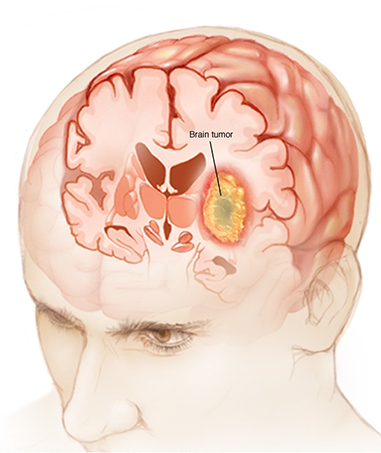
Treating Brain Tumors
If doctors determine that you have a tumor, the treatment options and prognosis are based on the following factors:
- Tumor type.
- Location and size of tumor.
- Tumor grade (how abnormal the cells are).
- Your age, medical history and general health.
Understanding Radiation Therapy
Radiation therapy, sometimes called radiotherapy, is the careful use of radiation to safely and effectively treat many different kinds of tumors.
Radiation oncologists use radiation therapy to kill tumors, control their growth, or relieve symptoms. This treatment works by damaging the ability of tumor cells to multiply, and once these cells die, the body naturally eliminates them. Although healthy cells near the tumor may also be affected by the radiation, they are generally able to repair themselves in ways that tumor cells cannot.
External Beam Radiation Therapy
External beam radiation therapy involves a series of daily outpatient treatments over several weeks to accurately deliver radiation to the brain. Radiation is often given after surgery, and sometimes it is used instead of surgery.
- 3-dimensional conformal radiotherapy (3D-CRT) combines multiple radiation treatment fields to deliver precise doses of radiation to the brain. Tailoring each of the radiation beams to the patient’s tumor allows coverage of the diseased cells while keeping radiation away from nearby organs, such as the eyes.
- Intensity modulated radiation therapy (IMRT) is the most recent advance in the delivery of radiation. IMRT differs from 3D-CRT by modifying the intensity of the radiation within each of the radiation beams.
- Stereotactic radiotherapy, sometimes called radiosurgery, is a type of external beam radiation therapy that pinpoints high doses directly on the tumor, in some cases in only one treatment. At some centers, stereotactic radiotherapy is called by the name of the company that makes the equipment.
X-rays, electrons and protons are all types of energy used in external beam radiation therapy.
Possible Side Effects
Side effects from radiation may include fatigue, hair loss in the treated area, scalp irritation, and muffled hearing, most of which usually improve within about a month after treatment, though your hair may not grow back exactly as it was before. Radiation can also cause short-term memory loss and difficulty thinking. Because side effects vary from person to person, your doctor may prescribe medications to help keep you comfortable. If you experience any discomfort during treatment, let your doctor or nurse know so they can provide relief. Before you begin therapy, be sure to talk with your radiation oncologist so you understand the potential side effects of your specific treatment and how best to manage them.
Possible Side Effects
- Get plenty of rest during treatment, and don’t be afraid to ask for help.
- Follow your doctor’s orders. Ask if you are unsure about anything. There are no stupid questions.
- Tell your doctor about any medications or vitamins you are taking, to make sure they are safe to use during radiation therapy.
- Eat a balanced diet. If food tastes funny or if you’re having trouble eating, tell your doctor, nurse or dietician. They may be able to help you change the way you eat.
- Treat the skin exposed to radiation with special care. Stay out of the sun, avoid hot or cold packs, only use lotions and ointments after checking with your doctor or nurse, and clean the area with warm water and mild shampoo or baby shampoo.
- Battling cancer is tough. Seek our help from support groups and friends.

Contact Form
MACON
The Peyton Anderson Cancer Life Center
800 First Street
Suite 110
Macon, GA 31201
Phone: (478) 743-3466
WARNER ROBINS
114 Sutherlin Drive
Suite R
Warner Robins, GA 31088
Phone: (478) 287-6353