



Lymphoma
Radiation Therapy for Lymphoma
Radiation therapy is a common and effective treatment for many types of lymphoma, including both Hodgkin and non-Hodgkin lymphoma. It uses high-energy beams to target and destroy cancer cells in specific areas of the body, often after chemotherapy has reduced the overall disease. Radiation may be used to eliminate remaining cancer cells, shrink enlarged lymph nodes, or treat localized sites where lymphoma first appeared. Modern techniques allow radiation oncologists to deliver precise doses while minimizing exposure to healthy tissue, making treatment safer and more targeted than in the past.
Risk factors for lymphoma vary depending on the type, but several are well recognized. A weakened immune system—whether from certain infections like HIV, autoimmune diseases, immunosuppressive medications, or organ transplants—can increase risk. Family history, exposure to high levels of radiation, and certain chemical exposures may also contribute. Some infections, such as Epstein–Barr virus (EBV) or Helicobacter pylori, are linked to specific lymphoma types. Age and gender play a role as well: Hodgkin lymphoma is more common in young adults, while non-Hodgkin lymphoma becomes more common with increasing age.
Signs and symptoms of lymphoma can be subtle and may resemble those of common illnesses. They often include painless swelling of lymph nodes in the neck, armpit, or groin; persistent fatigue; fever; night sweats; and unexplained weight loss. Some patients experience itching, shortness of breath, or abdominal discomfort if enlarged lymph nodes press on nearby organs. Because these symptoms can be caused by many conditions, medical evaluation is essential for an accurate diagnosis. Radiation therapy, when part of a personalized treatment plan, can help achieve long-term control or cure for many lymphoma patients.
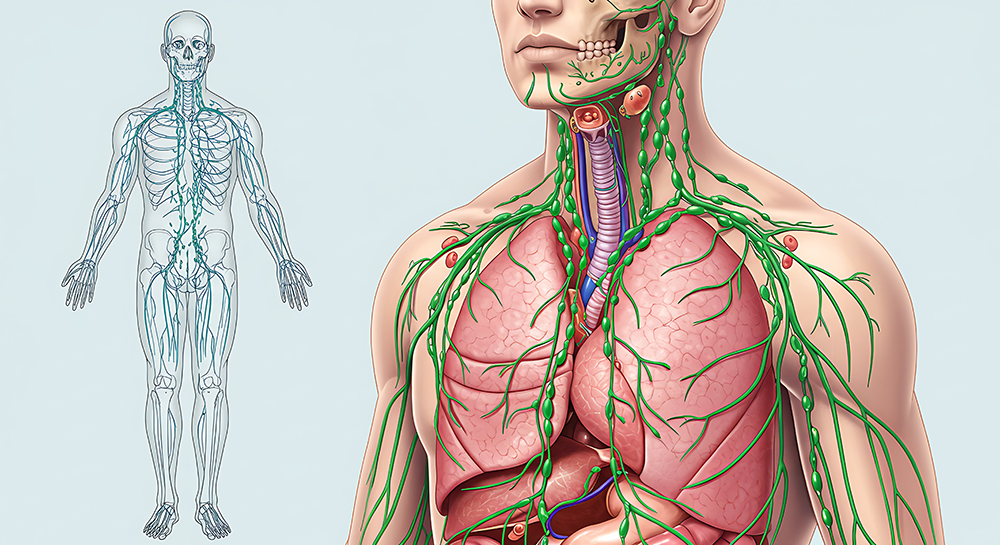
Hodgkin’s Lymphoma
- Hodgkin’s lymphoma (or Hodgkin’s disease) most often begins in the larger, more central lymph nodes of the body including those along the largest blood vessels of the neck, central chest, abdomen along the spine, and armpit and groin areas where the vessels return from the arms and legs.
- It is named for the British doctor Thomas Hodgkin, who first described the disease in 1832.
- According to the American Cancer Society, more than 8,000 people will be diagnosed with Hodgkin’s in the United States each year.
- Hodgkin’s is very treatable and often curable. More than 75 percent of patients with Hodgkin’s live longer than 10 years after diagnosis.
- Hodgkin’s is usually treated with radiation therapy and/or chemotherapy.
Non-Hodgkin’s Lymphoma (NHL)
Non-Hodgkin’s lymphoma (NHL) is a diverse group of blood cancers that develop in the lymphatic system, which is part of the body’s immune defense. Unlike Hodgkin lymphoma, which has a specific type of abnormal cell called the Reed-Sternberg cell, NHL encompasses many subtypes that can behave differently—some slow-growing and others more aggressive. It can occur at any age but becomes more common as people get older, and risk factors include a weakened immune system, certain infections, family history, and exposure to chemicals or radiation. Symptoms often include painless swelling of lymph nodes, fatigue, fever, night sweats, unexplained weight loss, or abdominal discomfort. Because the disease varies widely in how it presents and progresses, treatment plans—often involving chemotherapy, immunotherapy, radiation therapy, or a combination—are tailored to each patient’s specific type and stage of NHL.
Stages of Lymphoma
Lymphoma is classified into four stages based on how far the disease has spread within the body, which helps guide treatment decisions and predict outcomes.
Stage I lymphoma is the earliest form, involving a single lymph node region or a single organ outside the lymphatic system.
At Stage II, lymphoma is found in two or more lymph node regions on the same side of the diaphragm—the muscle that separates the chest from the abdomen—or it may involve a nearby organ along with those lymph nodes.
Stage III lymphoma is more widespread, affecting lymph node regions on both sides of the diaphragm. It may also involve the spleen or nearby organs as the disease progresses.
Stage IV is the most advanced stage, in which lymphoma has spread beyond the lymphatic system to involve one or more organs such as the liver, bone marrow, or lungs. Despite these stages, many forms of lymphoma remain highly treatable, and outcomes depend on the type of lymphoma, its growth pattern, and how it responds to therapy.
Treatment Options for Lymphoma
Radiation therapy is an important treatment option for many types of lymphoma and is often used alongside chemotherapy to improve outcomes. As a localized treatment, radiation targets specific lymph node regions or organs where lymphoma is present, using high-energy beams to destroy cancer cells while sparing surrounding healthy tissue as much as possible. It may be used as the primary treatment for early-stage Hodgkin or certain non-Hodgkin lymphomas, or as consolidation therapy after chemotherapy to eliminate any remaining cancer cells. Modern techniques, such as intensity-modulated radiation therapy (IMRT) and involved-site radiation therapy (ISRT), allow doctors to deliver precise doses and limit radiation exposure to nearby organs. Radiation can also be used to relieve symptoms caused by enlarged lymph nodes, such as pain, pressure, or breathing difficulties. Your radiation oncologist will tailor the treatment plan based on the type of lymphoma, its location, and your overall health to achieve the best possible results.
Biologic Therapy
Also called immunotherapy, biologic therapy works with your immune system to fight disease. Biologic therapy is like chemotherapy. The difference is that chemotherapy attacks the diseased cells directly, and biologic therapy helps your immune system fight the disease.
- Monoclonal antibodies work by targeting certain molecules in the body and attaching themselves to those molecules.This causes some cells to die and makes others more likely to be destroyed by radiation and chemotherapy.
- Radiolabeled antibodies are monoclonal antibodies with radioactive particles attached. These antibodies are designed to attach themselves directly to the diseased cells and damage them with small amounts of radiation without injuring nearby healthy tissue.

Contact Form
MACON
The Peyton Anderson Cancer Life Center
800 First Street
Suite 110
Macon, GA 31201
Phone: (478) 743-3466
WARNER ROBINS
114 Sutherlin Drive
Suite R
Warner Robins, GA 31088
Phone: (478) 287-6353